When families ask about technology in education, they are more often than not asking about balance—preparing children for the digital world without losing any of the essential ingredients that make childhood so important.
At The Little School, we see technology as one more tool we use to support curiosity, community, and authentic learning—a tool that is always used in developmentally appropriate and purposeful ways.
Key Insights
- Technology at TLS means more than screens.
From woodworking tools to digital devices, students learn that technology is yet another tool used to explore ideas, solve problems, and create. - Integration, not isolation.
Technology is woven into authentic, project-based learning — from bridge-building to podcast production — never as a standalone activity. - Developmentally appropriate use.
Hands-on exploration leads the way in early childhood. Gradually, students take on digital responsibilities such as research, collaboration, and digital citizenship in upper grades. - Progressive education at work.
TLS’s approach balances innovation with empathy and community, ensuring technology enhances, rather than replaces, relationships and creativity. - Preparation for a changing world.
Whether learning design principles or AI ethics, students build curiosity, critical thinking, and the confidence to use technology responsibly and imaginatively.
What Do We Mean by “Technology” at TLS?
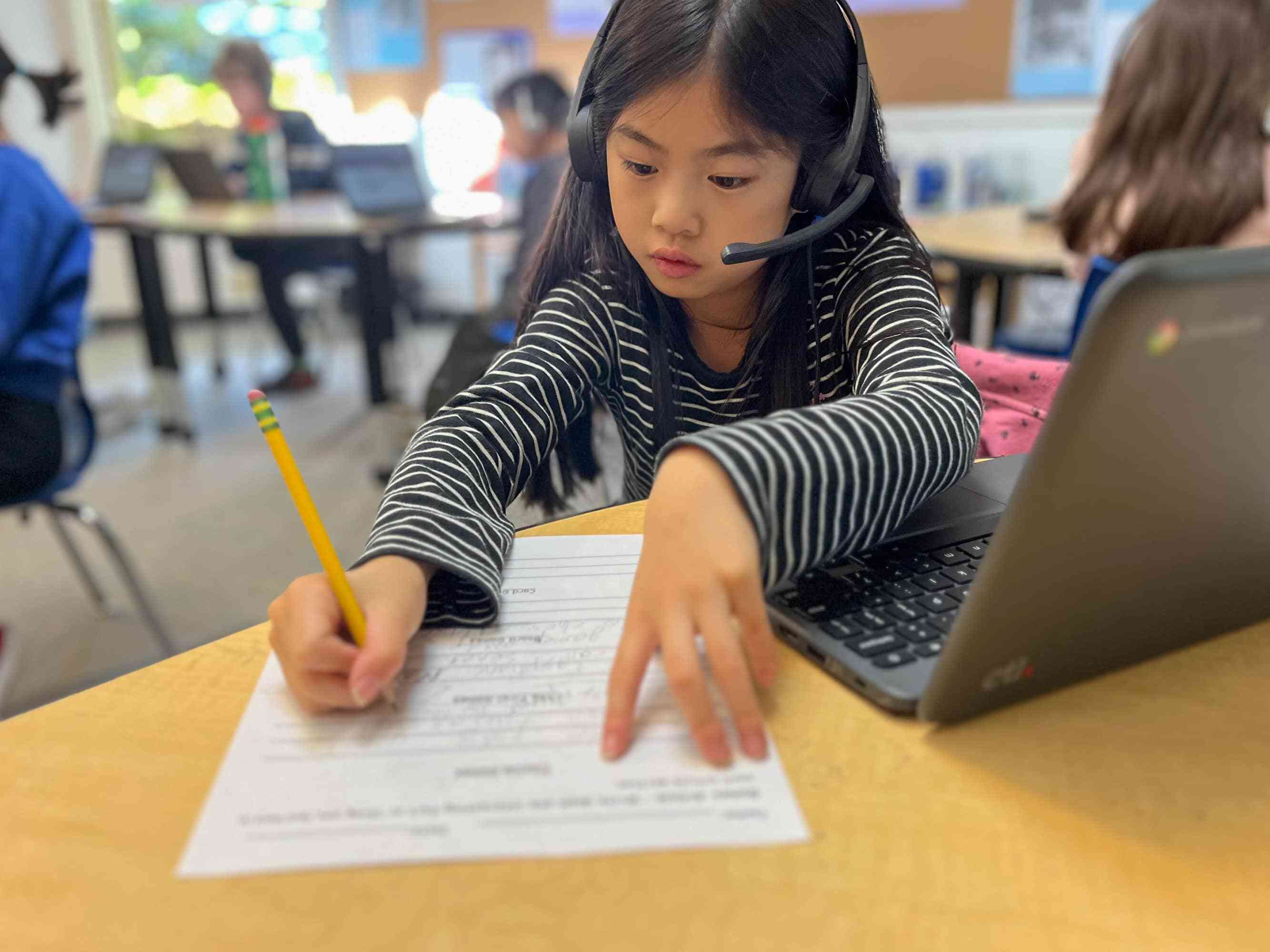
When we say “technology” at The Little School, we mean more than screens and devices. In our younger levels, children learn with real tools—like saws and hammers, measuring tapes, and graph paper—to design and build. As Stephen Harrison, our Technology, Engineering and Design (TED) specialist, explains, “When I’m working on projects with kids, like woodworking, using hand tools to build a garden trellis, these are all examples of technology. I think it’s important for kids to know that technology isn’t only screens; it’s about finding the right tools, analog or digital, to solve problems and create.”
Such a concrete-first approach is a hallmark of a progressive education approach: children build understanding through hands-on exploration, then gradually take on more abstract concepts including learning through digital tools.

The Principles That Guide Our Choices
Our program engages children in authentic learning, friendships and community, growing the academic and social skills to be successful learners, collaborators and citizens. How we use technology flows from those values, not the other way around.
TLS’s nature-rich campus (12.5 acres of woods and meadows) is a daily teacher; projects often begin outdoors, where curiosity can spark deeper observations and the need to engage in problem-solving and creation.
The Right Tool for the Task
We don’t isolate “tech time” in a lab. Instead, technology is integrated into thematic, project-based learning across the curriculum. As Regan Wensnahan,
Director of Enrollment Management, puts it, “Tech isn’t something on the side. The way we approach tech is the way we approach almost any kind of learning here at The Little School. It’s integrated into the projects, it’s used authentically. It’s never a standalone practice. It always has a purpose.”
That philosophy comes to life through TED, one of the six specialist programs here at The Little School. TED integrates design thinking and creative problem solving into classroom projects, helping students build confidence in their abilities.
For instance, a recent third-grade unit focused on bridges, where students explored structural engineering (arch, suspension, and beam bridges) as well as the social-emotional idea of “bridging” to peers. The students researched, built scale models in teams, and even wrote and staged a play as well as created a gallery walk for families. Integrating learning that blends literacy, science, engineering and the arts, all supported by the right tools, is at the heart of our technology philosophy.
At the fourth- and fifth-grade level, students recently produced multi-episode podcasts—researching, scripting, recording, editing, and sharing their work with the community. Harrison notes that the process may have been challenging, but it’s important for “kids to understand that it’s okay to be frustrated when you’re figuring something out, and then celebrating when they reach that breakthrough.”
These experiences embody what he calls productive struggle: the space where children learn persistence, problem-solving, and pride in their own progress.
What Technology in Progressive Education Looks Like Across Grade Levels
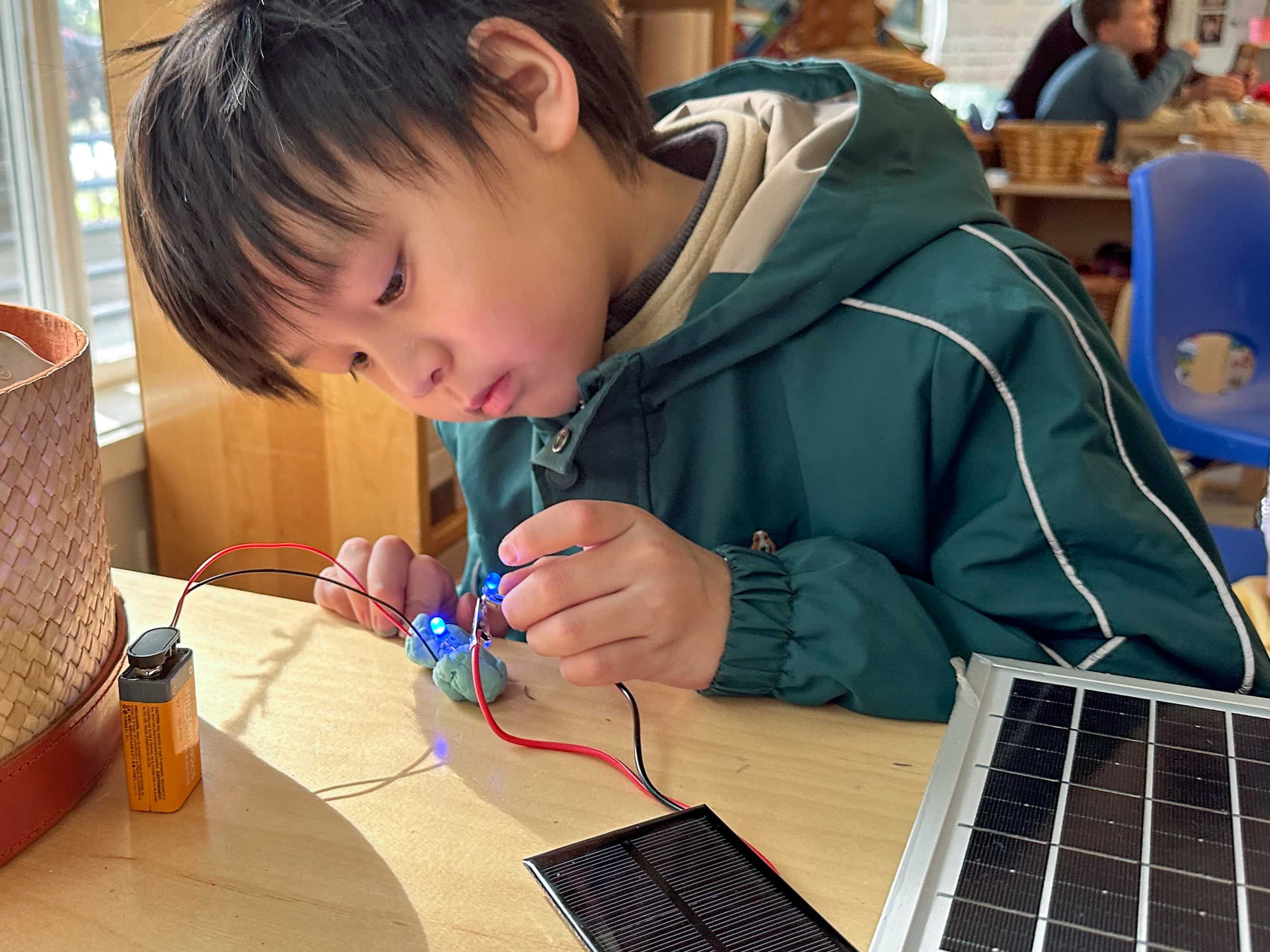
In early-childhood to Grade 2, the emphasis is on hands-on, hand-held tools, outdoor exploration, and collaborative projects with minimal screentime. Technology shows up as materials and tools, allowing students to measure, build, record observations, and share work with their classmates.
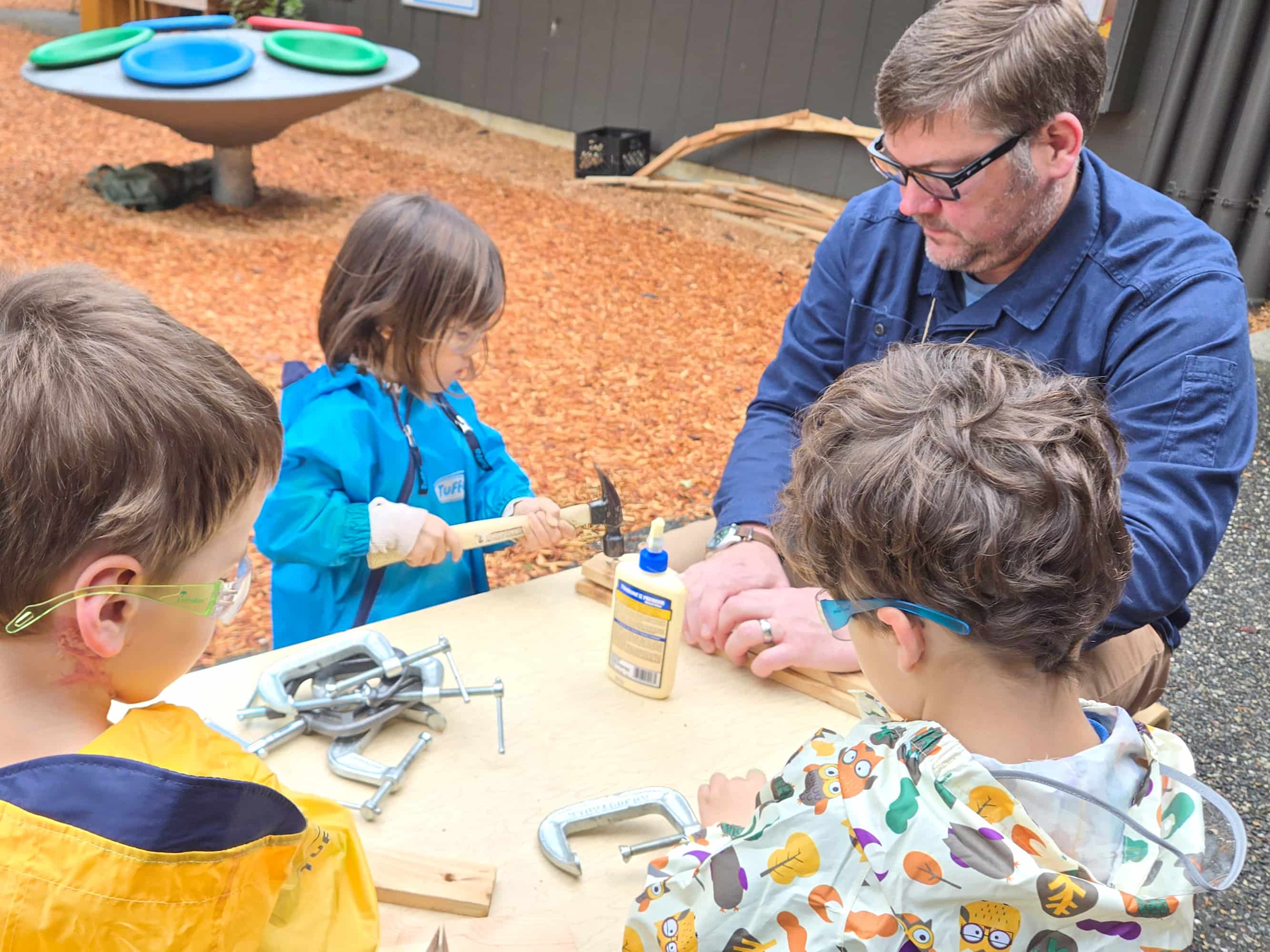
In Grades 3 to 5, there is a gradual increase in digital tasks that fit the work: research, drafting and revising writing, and collaborative creation. Students receive Chromebooks in grades 4–5, as well as instruction on how to use Google Classroom, file management, research skills, and keyboarding.
“Beginning in third grade, but definitely by fourth and fifth, each student has their own Chromebook,” Harrison explains. “They’re learning to manage their devices, organize files, collaborate with peers, and use Google Classroom. It’s about building the foundational skills they’ll need later on.”
Across grades, specialist teachers, including Art, Environmental Education, Library, Music, P.E. and TED, collaborate with classroom teachers so children experience multiple types of learning and expression.
Learning About Digital Citizenship
Digital citizenship is taught through guided exploration. For example, students might be asked to co-edit a shared document. The first time, as Harrison explains, the students often discover that they can add comments or even delete a partner’s paragraph. That’s when the real learning happens: students see how actions affect others, how to restore work, and come up with respectful ways in which to collaborate.
“You have to give them room to play with it…and then talk about responsibility, respect, and being on task,” Harrison notes.
This approach mirrors everything we do at TLS: curiosity first, reflection next, and ethical community always at the center.
How The Little School is Approaching AI
We have convened a cross-school AI task force to explore age-appropriate guidelines that will evolve as the technology changes.
On the teacher's side, AI can be a valuable tool, used to jump-start lesson planning or adapt a news article to a third-grade reading level. Educators, however, still bring the professional judgment that no tool can replace.
On the student side, our focus is foundational: understanding what AI does, practicing discernment (“Is this accurate? Is it useful?”), and discussing ethical considerations, including environmental impact, at developmentally appropriate moments.
“So much of early learning is concrete. When you understand the physical world well—how things fit together, how tools work—you can build a stronger abstract understanding later. That’s how we think about preparing kids for things like AI; it’s abstract, but it rests on those concrete foundations,” says Wensnahan.
See It All in Action at The Little School
The best way to understand this philosophy is to see it come alive. Walk into a classroom where students are sketching designs for a bridge or recording a podcast about their favorite books. Step outside and find children measuring, building, and exploring the natural campus that inspires so much of their learning.
Everywhere you look, you’ll see students engaged—eyes bright, hands busy, ideas flowing. You’ll see a school where curiosity and creativity meet intention, and where technology, art, nature, and community intertwine to create something remarkable.
Book a tour or contact our admissions team to experience The Little School in person. Discover a place where children learn to think critically, act compassionately, and see technology as a tool for exploring an ever-changing world.